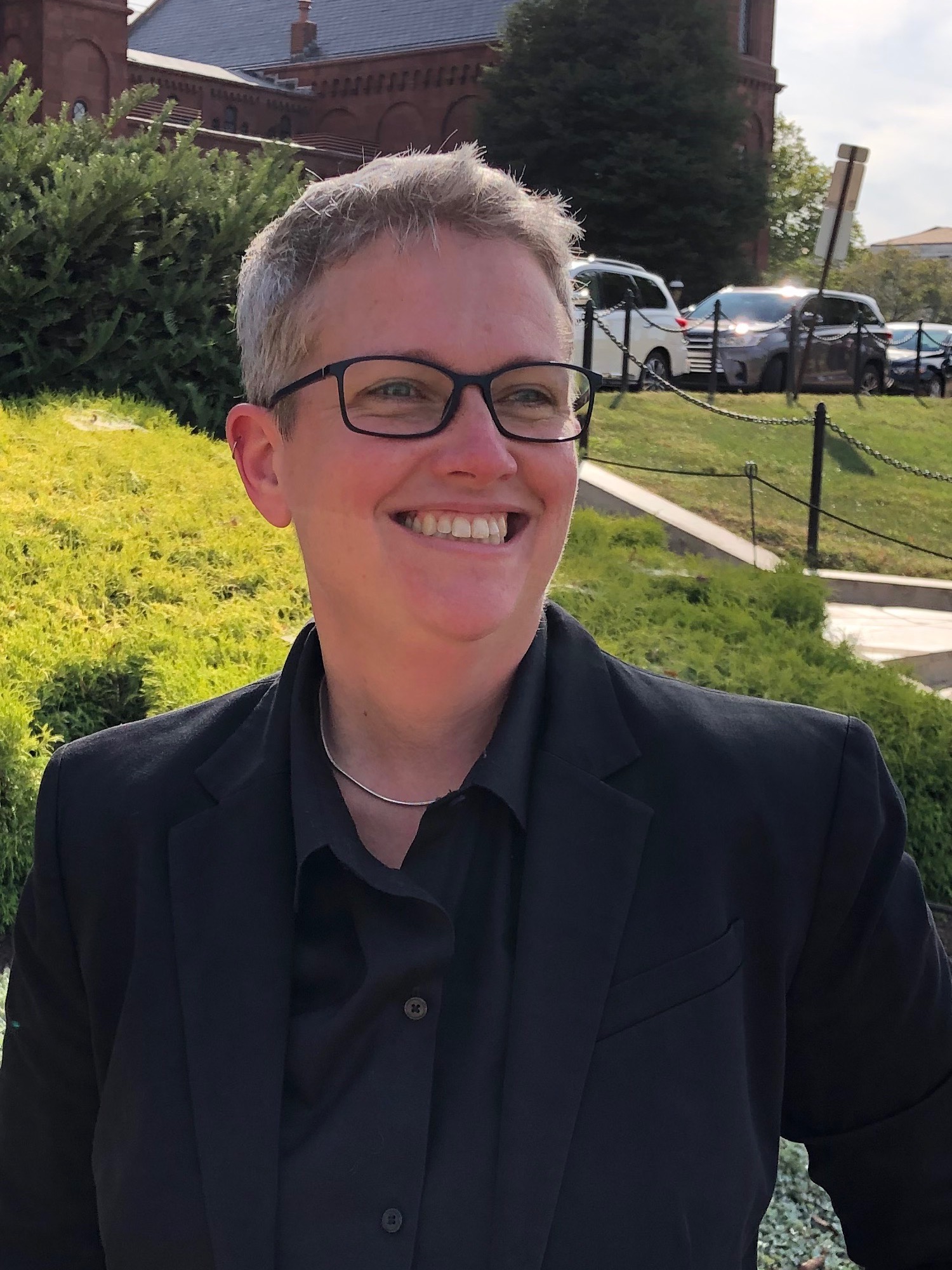
 Dr. Sharon M. Leon brings two decades of experience in the field of digital public humanities and digital scholarship to her role as Chief Operating Officer of Digital Scholar, the not for profit corporation that stewards essential digital software. In addition to directing the Omeka family of web publishing platforms, which includes Omeka Classic, Omeka S, Omeka.net, and Omeka Services, Dr. Leon is at work on a digital project to surface and analyze the community networks and experiences of the cohort of people enslaved and sold by the Maryland Province Jesuits in the Eighteenth and Nineteenth Centuries, Life and Labor under Slavery: the Jesuit Plantation Project. Prior to joining Digital Scholar full time, she was Associate Professor of History and Digital Humanities at Michigan State University where she launched the On These Grounds project, an initiative funded by the Mellon Foundation to design, develop, test, and disseminate a linked open data ontology to describe the lived experiences of enslaved people who labored for colleges and universities.
Previously, Dr. Leon spent over thirteen years in George Mason University’s History Department at the Roy Rosenzweig Center for History and New Media as Director of Public Projects, where she oversaw collaborations with library, museum, and archive partners from around the country. In the past, she has taken a leadership role in the following projects:
- Histories of the National Mall
- Scripto: Crowdsourcing Documentary Transcription
- September 11 Digital Archive
- Bracero History Archive
- Martha Washington: a Life
- Mobile for Museums
- teachinghistory.org
- Historical Thinking Matters
- The Object of History: Behind the Scenes with the Curators at the National Museum of American History
- World History Matters
- Women in World History
Dr. Leon holds a Ph.D. in American Studies from the University of Minnesota Twin-Cities and an A.B. in American Studies from Georgetown University. She is author of An Image of God: the Catholic Struggle with Eugenics (2013), published by University of Chicago Press.
Interviews
- “Sharon Leon, Part 1: A Better History of Digital History,” AHR Interview, January 15, 2020.
- “Sharon Leon, Part 2: Historians and Datta,” AHR Interview, January 15, 2020.
- Melissa Dinsman, “The Digital In the Humanities: An Interview with Sharon Leon,” LARB, July 10, 2016.